
STD/HIV Testing New York
Don’t miss a single update on STD information in & around New York. Find STD testing near you with +4500 testing Center, we cover nearly entire New York including parts of New york city, Rochester, Buffalo, Albany, Syracuse & more.

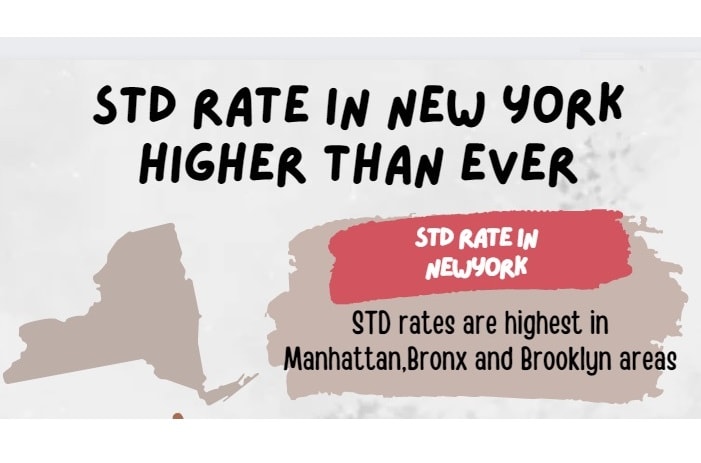
Find STD Testing Clinic in New York
Epidemiological Analysis: STIs in NYC (2005–2026)
A Longitudinal PhD-level Study on Trends, Demographics, and Social Determinants
1. Macro Trends: The Tri-Phasic Surge
Over the past two decades, NYC has transitioned through three distinct epidemiological phases: (1) The Digital Rise (2005-2012), where location-based apps began altering partner-seeking behavior; (2) The PrEP/Bio-Medical Shift (2013-2019), marked by a decline in HIV but a decoupling of condom use from STI prevention; and (3) The Post-Pandemic Volatility (2020-2025).
2. Neighborhood Vulnerability & Poverty
The distribution of STIs in NYC is not random; it mirrors historical lines of redlining and current socioeconomic disadvantage. High-poverty neighborhoods (>30% below poverty line) exhibit rates nearly 3x higher than low-poverty areas.
| Neighborhood Category | Hotspot Areas | Primary Vulnerable Group | Risk Drivers |
|---|---|---|---|
| High-Density MSM | Chelsea, Clinton, Hell's Kitchen | Young MSM (18-34) | App-based hookup culture, PrEP-related condom fatigue. |
| Structural Disadvantage | South Bronx, Central Harlem | Black/Latino Youth | Medical mistrust, low health literacy, pharmacy deserts. |
| The New Frontier | East New York, Bushwick | Women of reproductive age | Rising syphilis rates, lack of integrated prenatal care. |
Demographic Disparity (2025)
3. Cultural & Behavioral Dynamics
The "PrEP Paradox": As HIV becomes a manageable chronic condition, the perceived "risk" of other STIs (Syphilis, Gonorrhea) has plummeted. This has led to a cultural normalization of condomless sex among high-risk groups.
Medical Mistrust: In communities like the South Bronx, historical trauma with medical institutions leads to "delayed care-seeking," which increases the window of transmissibility for asymptomatic infections like Chlamydia.
4. The Crisis of Congenital Syphilis
The most alarming trend of the last decade is the resurgence of maternal-to-fetal transmission. After decades of near-elimination, cases in NYC have spiked 517% since 2015.
5. Future Glimpse & Strategic Remedies
Heading into 2026, we anticipate a stabilization of Chlamydia due to improved home-testing kits, but a continued struggle with drug-resistant Gonorrhea.
Recommended Remedies:
- Decoupling Care from Stigma: Shifting STI testing from dedicated clinics to primary care and community-led pop-ups.
- Digital Outreach: Integrating health alerts directly into dating apps (Tinder, Grindr, Hinge) based on local "hotspot" data.
- Addressing the Housing-Health Axis: Research shows that housing instability is a primary driver of STI acquisition among NYC youth.